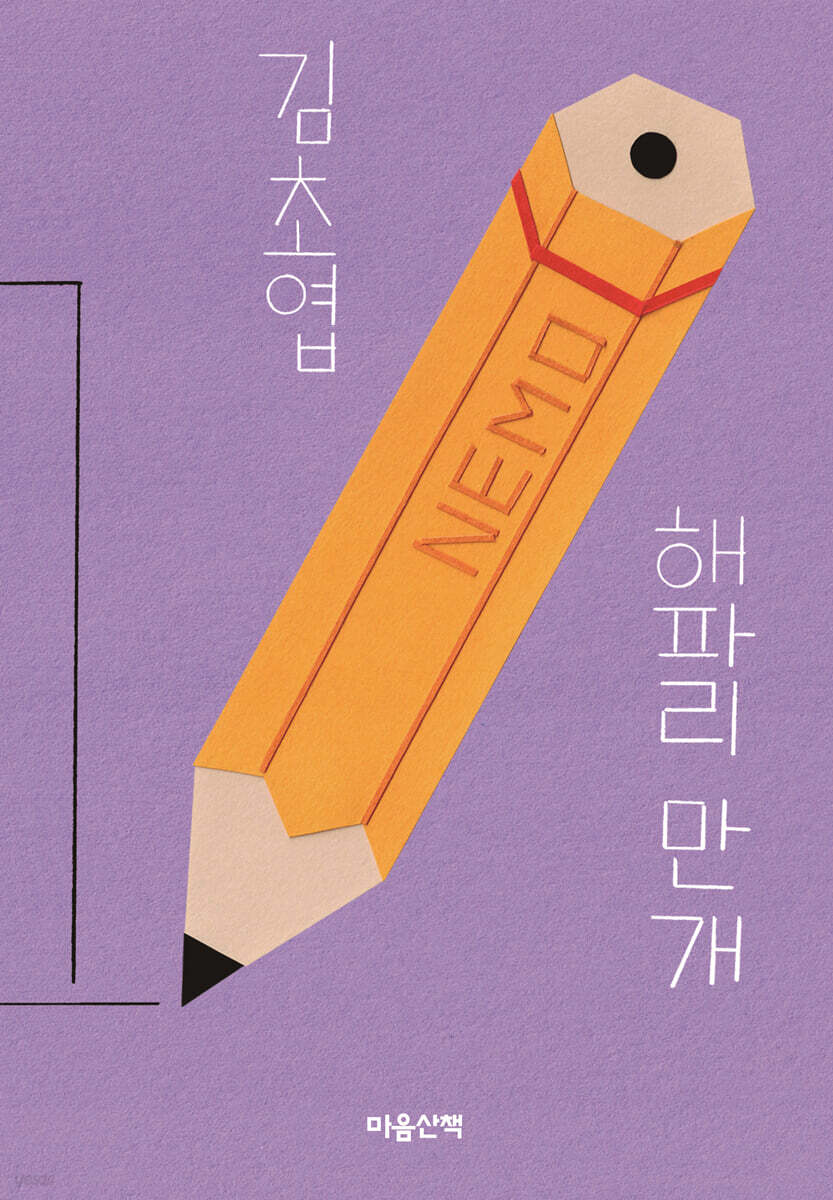
Key Answer: Jellyfish in Full Bloom (해파리 만개) is a 2026 short story collection by acclaimed Korean science fiction writer Kim Cho Yeop, published by Maumsanchaek. It gathers strange, undefinable beings such as "Sand," "Jellyfish," and "Jelly" to question human-centered ideas of usefulness and belonging, offering international readers a compact, illustrated entry point into contemporary Korean speculative fiction. As of this writing, no English translation has been announced; translation status should be checked on KLWAVE.
Book Information
- English Title: Jellyfish in Full Bloom
- Korean Title: 해파리 만개
- Author: Kim Cho Yeop (김초엽)
- Illustrator: Park Jisook (박지숙)
- Publisher: Maumsanchaek
- Year: 2026
- ISBN: 9788960909878
- Genre: Science Fiction / Short Story Collection
- Source: KLWAVE - Korean Literature Worldwide
Why Should International Readers Pay Attention to This Book?
Kim Cho Yeop is one of the most internationally recognized names in contemporary Korean science fiction, best known for If We Cannot Go at the Speed of Light. Jellyfish in Full Bloom is her second short story collection, and it continues her signature project: imagining coexistence between humans and non-human others. For readers outside Korea, this book is a compact way to sample a writer whose work has already traveled well across languages, and it does so through short, illustrated pieces that reward even a single sitting. Its themes, questioning who or what counts as worthy of care, translate easily across cultures without needing deep familiarity with Korean history or geography.
What Problem Does This Book Address?
Modern life constantly sorts people and things by usefulness: what functions, what produces, what serves a purpose. Kim Cho Yeop's collection pushes back against this logic. The beings in her stories, Sand, Jellyfish, Sticky, Square, and Jelly among them, resist being defined by function or purpose, yet they still find ways to connect with the world around them. The book asks a pointed question: if usefulness is not a legitimate way to measure worth, how should we see the strange, unclassifiable, or marginal beings, and by extension people, that surround us? This is not an abstract philosophical exercise. It is a direct challenge to readers to reconsider whom they have overlooked because that person or thing did not seem to serve an obvious purpose.
What Makes This Book Stand Out?
- Written by Kim Cho Yeop, a leading figure in Korean science fiction whose work has already reached international audiences.
- A short story collection built around genuinely strange, hard-to-classify beings rather than familiar science fiction tropes.
- Illustrated by Park Jisook, whose artwork visually extends the boundary between the real and the unreal.
- Follows and expands on the ideas from her first collection, The Bookstore of Planetary Languages.
- Published by Maumsanchaek, a Korean publisher respected for literary and accessible nonfiction and fiction alike.
What Is the Core Insight Worth Noting?
The most striking idea in Jellyfish in Full Bloom is that usefulness is a human invention, not a natural law, and it is a poor measure of who deserves recognition or care. By naming her beings after ordinary things, sand, jelly, a square, Kim strips away the exoticism that science fiction often relies on and instead points at the everyday. The insight lands because it does not stay confined to imagined creatures: it is an argument about how societies decide who belongs and who is pushed to the margins. For readers anywhere, the takeaway is a practical one: notice who you have stopped looking at because they seemed to serve no clear function, and look again.
How Should a Non-Korean Reader Approach This Book?
- Read it as a collection of short, standalone pieces rather than a single continuous narrative; each story can be read in one sitting.
- Pay attention to the names Kim gives her beings. Their ordinariness is intentional and central to the book's argument.
- Look at Park Jisook's illustrations as part of the text, not decoration. They are described as extending the story visually.
- Compare Kim's approach to non-human perspectives with Western science fiction that features similarly unclassifiable beings, such as work by Ted Chiang or Ursula K. Le Guin, to see what is distinctly Korean about her framing.
What Questions Should Readers Carry While Reading?
Translated Korean speculative fiction rewards active reading, especially when it plays with categories the way this collection does. These questions help keep that attention sharp.
- Which of Kim's invented beings reminds you most of someone or something you have personally dismissed as "not useful"?
- How does illustration change your reading of a short story compared to text alone?
- What does the book suggest happens to beings, or people, who cannot be classified by existing categories?
- How does this collection's treatment of non-human perspectives compare with speculative fiction from your own literary tradition?
- If you could add one more "impossible" being to this collection, what would it be and what problem would it embody?
Who Should Read This Book?
- Fans of literary science fiction who enjoy short, idea-driven stories over long-form world-building
- Readers who have already enjoyed Kim Cho Yeop's If We Cannot Go at the Speed of Light
- Anyone interested in illustrated fiction that treats art as integral to storytelling
- International readers looking for an entry point into contemporary Korean speculative fiction
- Book clubs interested in discussing questions of belonging, usefulness, and marginalization through fiction
Frequently Asked Questions
Is Jellyfish in Full Bloom available in English?
As of this writing, no confirmed English translation has been announced. KLWAVE's translator interest section for this title currently shows no submitted expectations, so translation status should be checked directly on KLWAVE before assuming an edition exists.
Do I need to read Kim Cho Yeop's other books first?
No. This collection stands on its own. However, readers familiar with If We Cannot Go at the Speed of Light or her first short story collection, The Bookstore of Planetary Languages, will recognize a continuation of her interest in coexistence between humans and non-human others.
What genre is this book?
It is a science fiction short story collection, though its tone leans more literary and philosophical than action-driven. It is illustrated throughout by artist Park Jisook.
Is this book appropriate for readers new to science fiction?
Yes. The stories are short, accessible, and grounded in familiar objects and settings rather than dense technical world-building, making them a gentle introduction to speculative fiction.
Where can I learn more about Kim Cho Yeop and her translation status?
KLWAVE, the official platform of the Literature Translation Institute of Korea, maintains an author and title profile with translation and rights information that is updated as new editions are confirmed.
Personal Thoughts
What stays with me about Jellyfish in Full Bloom is how Kim Cho Yeop makes the ordinary strange, and the strange feel oddly familiar. Naming a being "Square" or "Sticky" instead of giving it a grand alien name is a quiet but pointed choice. It refuses to let readers keep these beings at arm's length as exotic inventions. Instead, it asks us to see them, and by extension the people we tend to overlook, as already present among us, simply uncounted. That is a hard thing to pull off in short fiction, and it is why Kim continues to be one of the most interesting voices in Korean speculative writing today.
Final Note
Jellyfish in Full Bloom is part of a wave of Korean speculative fiction gaining attention well beyond Korea's borders, even when individual titles have not yet found an English publisher. Whether or not a translation of this particular book arrives soon, it is worth tracking through the same channel that surfaced it: KLWAVE. For more new and notable Korean books being introduced to international audiences, visit KLWAVE, the official platform of the Literature Translation Institute of Korea.
Book information and images referenced from YES24 and KLWAVE (Literature Translation Institute of Korea). This review is an original article written by the site operator based on publicly available book descriptions. Reference: KLWAVE Featured Title
