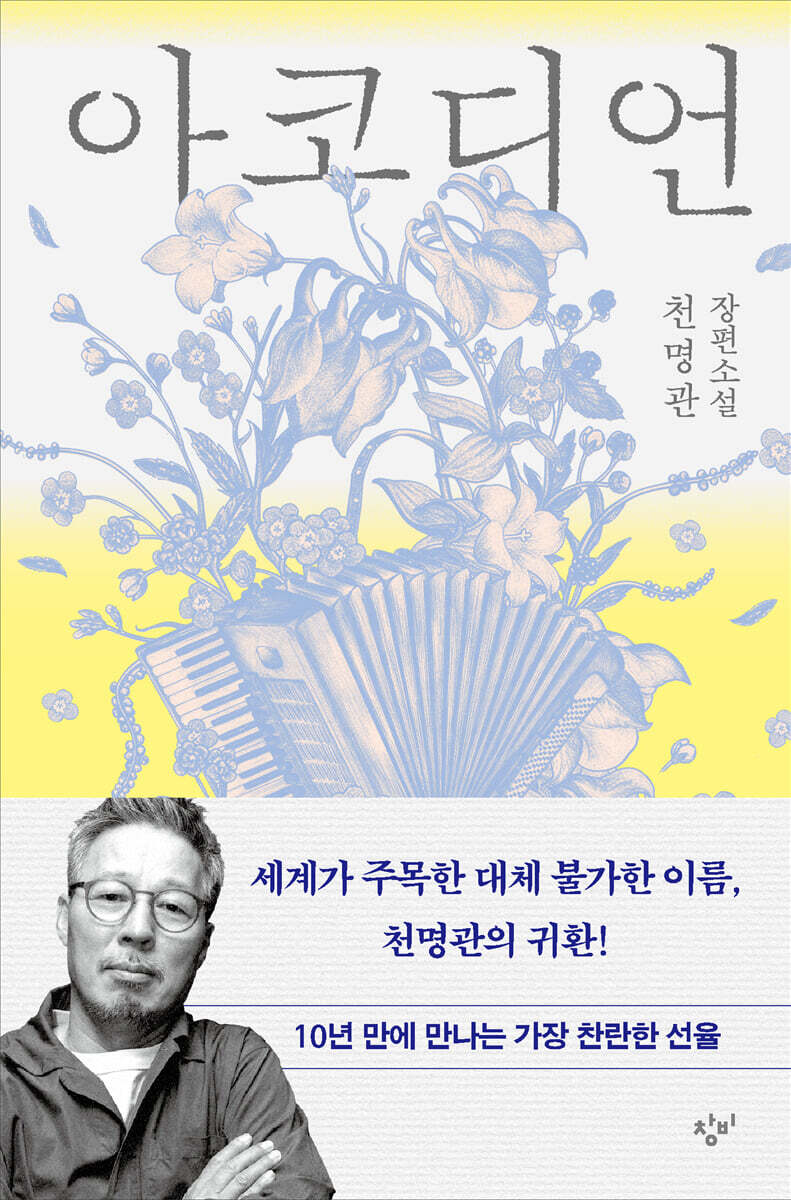
Key Answer: Cheon Myeong-kwan's Accordion is a 2026 Korean novel set in 1950s post-war Seoul about orphaned children who find solidarity and growth despite extreme hardship. Published by Changbi, the novel transforms despair into a story of resilience and the persistent energy of life.
Book Information
- English Title: Accordion
- Korean Title: 아코디언
- Author: Cheon Myeong-kwan (천명관)
- Publisher: Changbi Publishers
- Year: 2026
- Source: KLWAVE - Korean Literature Worldwide
Why Should International Readers Pay Attention to This Book?
Cheon Myeong-kwan is one of Korea's most distinctive voices in contemporary fiction, known for blending dark humor with deep compassion. Accordion is set in a period of Korean history that international readers rarely encounter in fiction: the immediate aftermath of the Korean War in 1950s Seoul. While Western literature about post-war childhood tends toward sentimentality or trauma narratives, Cheon takes a different path. He finds energy, humor, and solidarity in the lives of orphaned children. This makes Accordion both a historical novel and a story about the universal human capacity to build community under extreme conditions.
What Problem Does This Book Address?
Post-war fiction often falls into two traps: it either turns suffering into spectacle or reduces survivors to passive victims. Accordion avoids both. The children in this novel are not defined by what they have lost. They are defined by what they build together. Cheon addresses the question of how people maintain dignity and create meaning when the social structures around them have collapsed. This is a question that remains urgent today, from refugee camps to communities recovering from natural disasters.
What Makes This Book Stand Out?
- Set in 1950s post-war Seoul, a period rarely explored in Korean fiction available to international readers.
- Uses the metaphor of an accordion to represent life's capacity to produce beauty through rough, compressive movements.
- Focuses on solidarity and growth rather than victimhood, offering a counter-narrative to typical post-war fiction.
- Written by Cheon Myeong-kwan, whose previous works have been recognized with Korea's major literary prizes.
- Published by Changbi, one of Korea's oldest and most respected literary publishers, founded in 1966.
The Core Insight Worth Noting
The central metaphor of the accordion is what makes this novel memorable. An accordion produces music not despite its rough compression but because of it. Cheon applies this principle to his characters: their lives are squeezed by poverty, loss, and violence, but within those pressures, something musical emerges. This is not naive optimism. It is a carefully observed truth about how communities form under duress, how children adapt, and how art can emerge from the worst conditions.
How to Approach This Book as a Non-Korean Reader
- Research the Korean War's impact on Seoul before reading. Understanding that Seoul changed hands four times during the war gives context to the destruction Cheon describes.
- Pay attention to the children's language and humor. Cheon's dialogue captures a specific register of 1950s Korean street speech that translators face unique challenges in rendering.
- Compare with other post-war childhood narratives from different cultures, such as Ishmael Beah's A Long Way Gone or Khaled Hosseini's The Kite Runner.
- Notice how Cheon uses physical descriptions of Seoul's streets and buildings as emotional markers rather than mere setting.
Who Should Read This Book?
- Readers interested in Korean War history and its cultural aftermath
- Fans of literary fiction that combines humor with serious themes
- International readers looking for post-war narratives beyond the European and American canon
- Book clubs seeking culturally rich novels that spark discussion about resilience and community
Frequently Asked Questions
Is Accordion based on true events?
The novel is fiction, but it draws on the documented reality of war orphans in 1950s Seoul. The historical context is well-researched.
What does the title 'Accordion' refer to?
The accordion serves as a metaphor for life producing beauty through rough, compressive movements, much like the children in the novel finding meaning despite hardship.
Is this Cheon Myeong-kwan's most famous work?
Cheon is known for several acclaimed novels. His work consistently explores marginalized communities with dark humor and compassion.
Do I need background knowledge of the Korean War?
Basic awareness helps, but the novel is accessible without detailed historical knowledge. The emotional core is universal.
Where can I find English translations of Cheon's work?
Check KLWAVE and major English-language publishers of Korean literature, such as Dalkey Archive Press, Honford Star, and Archipelago Books.
Personal Thoughts
Accordion is the kind of novel that redefines what post-war fiction can do. Instead of asking you to feel sorry for its characters, it asks you to admire their ingenuity and warmth. The accordion metaphor is not just clever; it is earned by every page of the story. If you have ever felt that post-war literature tends to be relentlessly grim, this novel is a corrective.
Final Note
Cheon Myeong-kwan writes post-war childhood without reaching for either pity or spectacle, and that restraint is the thing most likely to survive translation intact. For readers whose picture of 1950s Korea comes mainly from war narratives, the orphans here will be an unfamiliar kind of company: opportunistic, funny, and organised. For more Korean books translated into English, visit KLWAVE, the official platform of the Literature Translation Institute of Korea.
Book information and images referenced from YES24 and KLWAVE (Literature Translation Institute of Korea). This review is an original article written by the site operator based on publicly available book descriptions. Reference: KLWAVE New Releases
