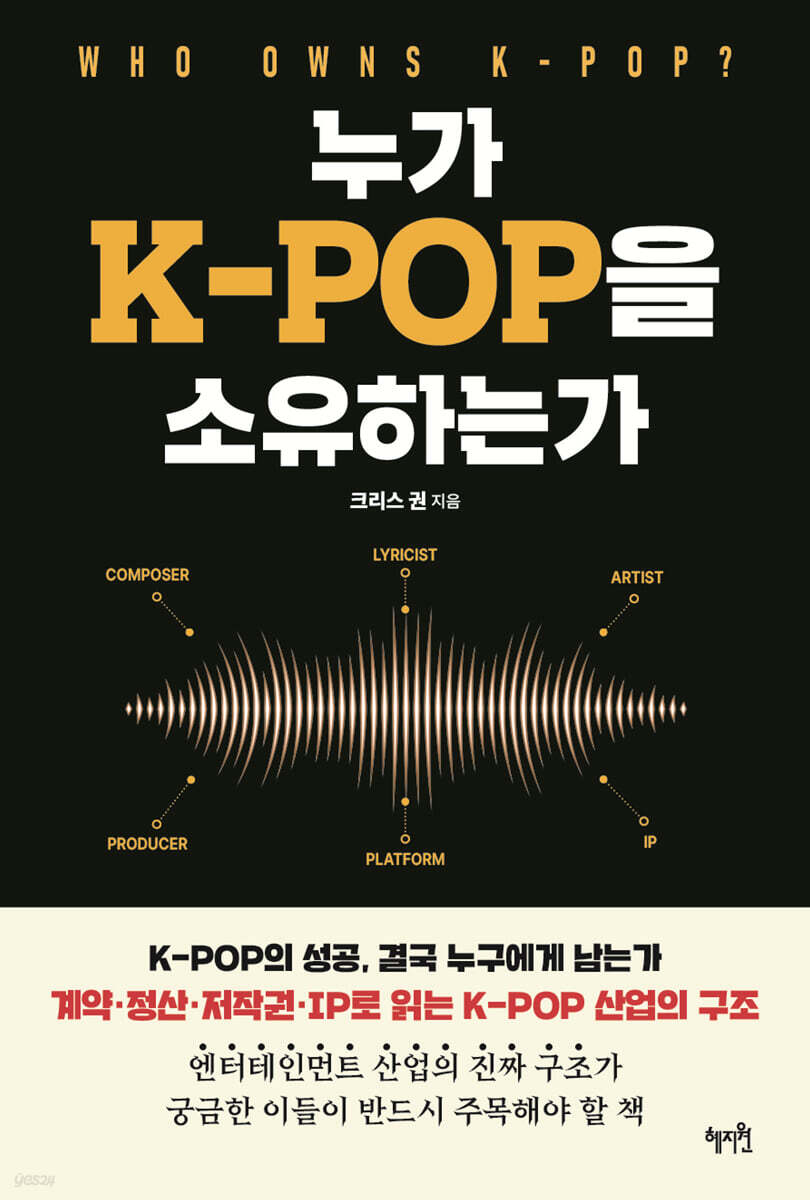
In one paragraph: Who Owns K-Pop? (누가 K-POP을 소유하는가) by Chris Kwon (크리스 권), published by Hyejiwon (혜지원), is a Korean business book about the part of K-pop fans rarely see: the contracts, royalty splits and rights layers that decide who actually keeps the money after a song becomes a global hit. The English title is my own translation, and an English edition has not been confirmed.
A question that sounds simple until you ask it about one song
Pick any K-pop track you know well and try to say who owns it. The singer? The agency that trained them? The songwriters, who may be three people in Seoul and two in Stockholm? The label that paid for the recording? The platform streaming it? Kwon's book starts from the observation that each of those parties owns a different thing, under a different contract, and that the answer changes depending on which revenue stream you follow.
That framing is what makes the book interesting to a reader outside Korea. International coverage of K-pop tends to focus on training systems, fandom economics or soft power. This one is about paperwork, and the paperwork is where most of the long-term value sits.
Who is writing, and why the career path matters
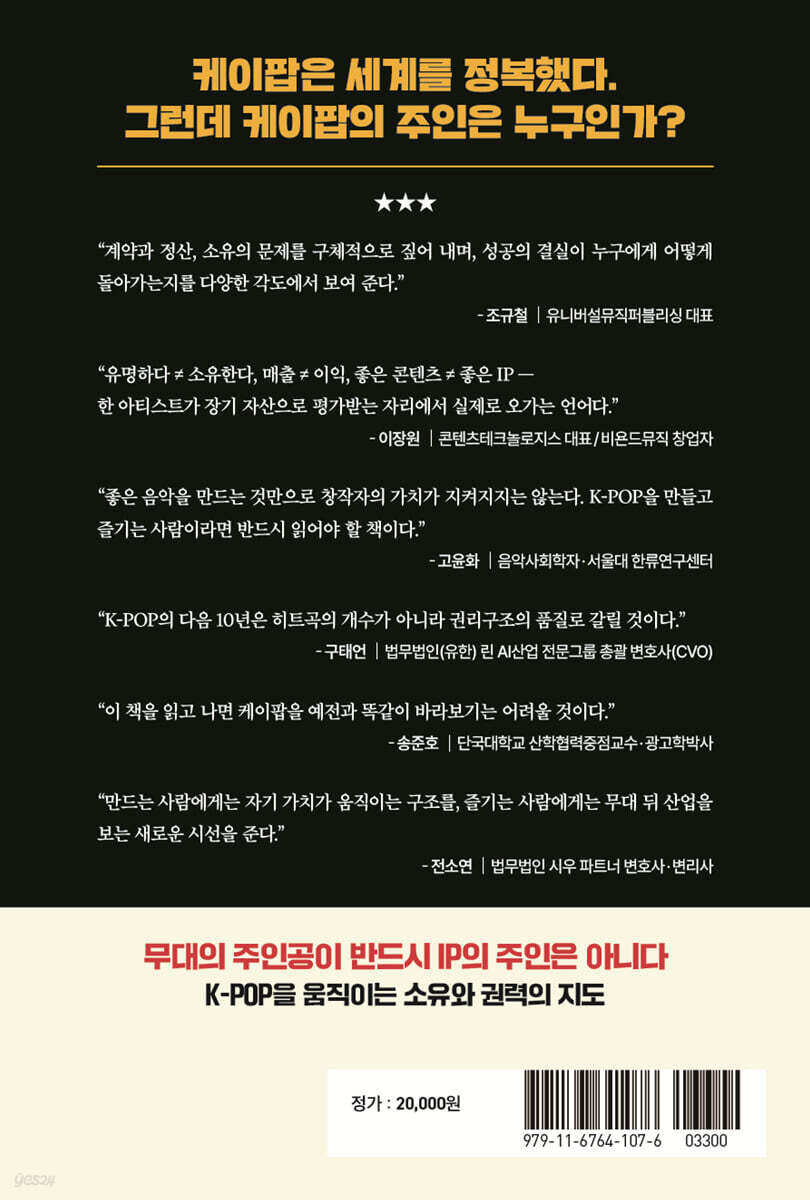
Kwon did not come up through music. According to the endorsements printed with the book, he started in finance, moved into artist management, and later worked on music catalog transactions and negotiations with global publishers and investment funds. One of the endorsers, a lawyer who advised on transfers of K-pop songwriters' catalogs, describes working through deals with him where the legal reading of a contract and actual industry practice did not match.
That path explains the book's angle. Someone from the artist side would probably write about fairness. Someone from the legal side would write about statutes. A person who has sat across the table from a fund buying a catalog writes about what an asset is actually worth, and why.
Three distinctions the book is built around
Lee Jang-won, founder of Beyond Music, summarises the book with three contrasts that he says are the real language of catalog deals:
- Being famous is not the same as owning. A widely recognised artist can hold very little of the underlying rights.
- Revenue is not profit. Gross numbers look large before recoupment, distribution fees and splits are applied.
- Good content is not the same as good IP. A song becomes a durable asset only if its rights are clean and clearly assigned.
Another endorser singles out a line I keep returning to: before arguing about whether a split is 70:30, ask seventy percent of what. That single question is probably the most useful thing a young artist or a new label founder could take from the book.
The rights layers most fans never separate
From the publisher's material, the book walks through the distinct rights attached to a single release: the musical composition (copyright held by writers and publishers), the master recording, performers' rights, and the trademark and likeness rights that cover a group's name and faces. Each moves under its own agreement. In practice this is why a group can disband while its songs keep earning for someone else, or why an artist can leave an agency but not take the group name with them. Western readers who followed disputes over masters in the US industry will recognise the pattern, but Kwon places it inside the Korean agency model, where the company often finances everything up front.
AI voices are where the rulebook runs out
A lawyer's endorsement points to the chapter on technology as the one that deserves the most attention from policymakers: AI composition, synthetic voices, training data, and digital copies of an artist's voice and face. The argument, as described, is that existing rights categories were built for recordings and compositions, and they leave gaps once an artist's traces circulate as data. Korea has one of the most commercially organised idol industries in the world, so it is likely to hit these questions early.
How it fits with other books I have covered here
This sits naturally beside Next C-Brand, which looked at how Chinese companies moved from copying to owning a brand identity. Both books are really about the gap between making something popular and holding the rights to it. It also reads as a companion to Can Business Solve 90% of Social Problems?, in the sense that both ask who captures the value a system creates, rather than whether the system works.
A note on timing and on what I have read
YES24 lists the publication date as 15 October 2026, while the book is already on sale, so the listing may be a pre-release date. I have not read the full 296 pages. This piece is based on the publisher's listing and the five endorsements printed with the book, from a label head, a music-tech founder, a lawyer, an advertising professor and an IP attorney. I will be looking in particular at whether the chapters on settlement give concrete worked examples, because the endorsements promise more than they show.
Who this is for
- Songwriters, producers and artists signing their first agreements
- Investors and analysts looking at music catalogs as an asset class
- International K-pop fans who want to understand agency disputes in the news
- Policy and legal readers following AI voice and likeness rights
Questions readers will probably ask
Is there an English edition?
Not that I can confirm. The English title used here is my own translation.
Do you need a legal background?
No. The endorsements repeatedly describe it as written for creators and fans as well as industry staff.
Does it take a side in agency versus artist disputes?
From the material available, it focuses on how the structure works rather than assigning blame, though its sympathy for creators understanding their own contracts is clear.
Closing thought
K-pop's next competitive edge, the book argues, is not a bigger hit but the ability to negotiate and set global terms. Whether or not that holds, it is a sharper question than most K-pop commentary asks, and it is the reason I will be reading this one in full.
Bibliographic details and cover images from the YES24 product page. Written independently in this blog's own words.
