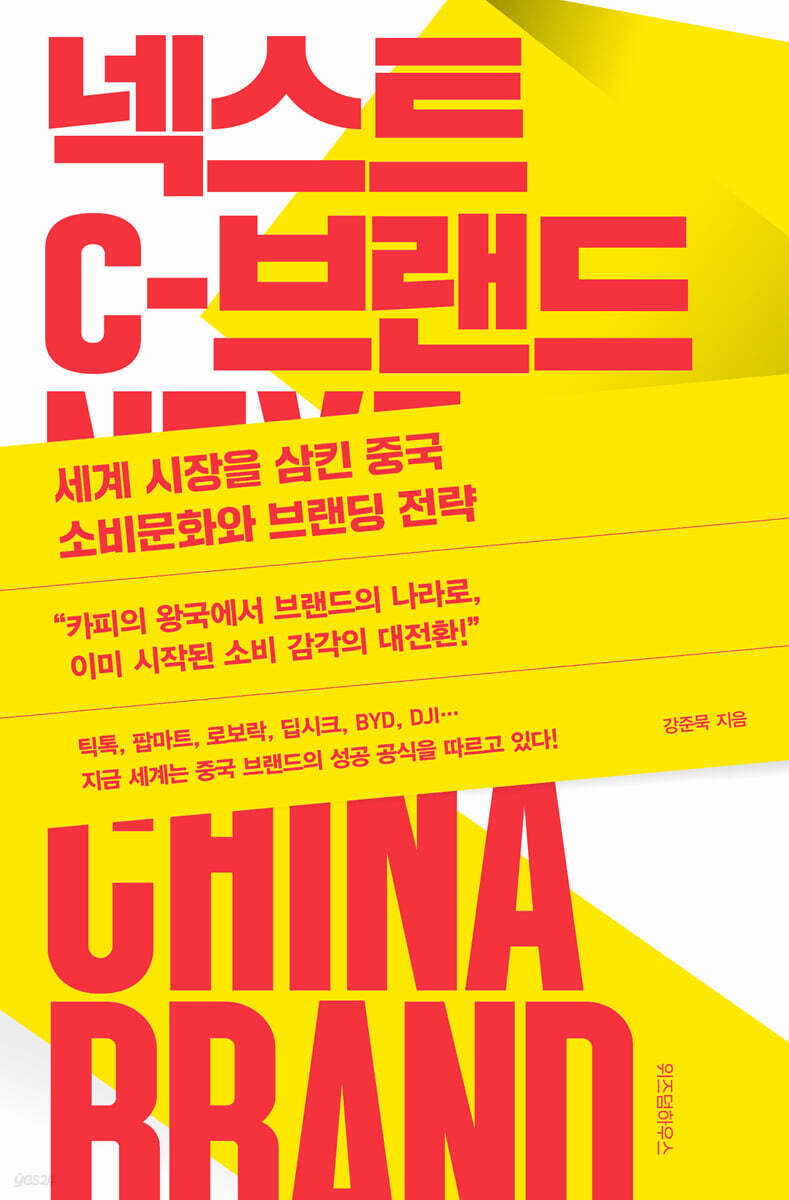
Short version first: Next C-Brand (넥스트 C-브랜드) argues that Chinese consumer brands have quietly stopped competing on price and started competing on feeling, and that the rest of Asia is now borrowing their playbook rather than the other way round. It is written by a Korean industrial designer who spent five years running a design centre inside one of China's largest appliance makers, which is what separates it from the usual outside-looking-in China commentary.
Twenty companies, one uncomfortable claim
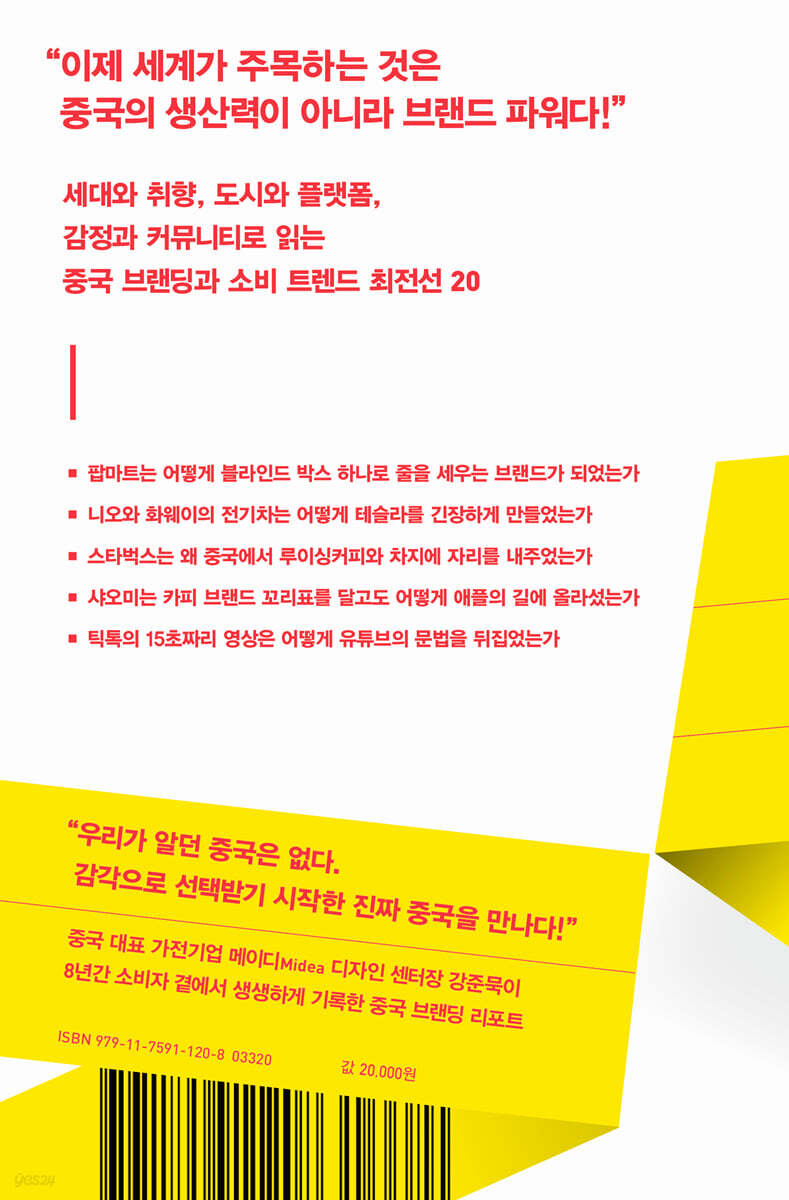
The book is built around twenty case studies: Xiaomi, Li-Ning, Anta, Heytea, Haidilao, Miniso, NIO, Luckin Coffee, Meituan, Didi, Taobao, TikTok, Perfect Diary, Pop Mart, Keep, Haier, Midea, Mixue Bingcheng, Lao Gan Ma, Pinduoduo, Temu, Shein, Roborock, DJI, Unitree, Zhipu AI, DeepSeek and SenseTime. Listed like that it reads like a trade-press roundup. The claim stitching them together is sharper than that: the author says the decisive change was not manufacturing capacity but the moment Chinese consumers stopped buying specifications and started buying identity, and that domestic brands adapted to that shift faster than the foreign brands operating alongside them.
If you only remember one sentence from the book, it is probably the chapter title in part five: from a country that refers to others, to a country others refer to (참고하는 나라에서 참고되는 나라로). That is the whole thesis in nine words.
Book information at a glance
- Title: Next C-Brand (넥스트 C-브랜드)
- Author: Kang Jun-muk (강준묵)
- Publisher: Wisdom House (위즈덤하우스)
- Publication date: 16 September 2026
- Length: 272 pages
- List price: KRW 20,000
- ISBN-13: 9791175911208
- English edition: not confirmed. As of this writing the book is available in Korean only, and no English translation has been announced.
Who wrote this, and why does the vantage point matter?
Kang Jun-muk worked as a designer at Hyundai Electronics and Samsung Electronics, then spent roughly three decades in industrial design and consumer-behaviour consulting. In 2018 Midea Group (메이디 그룹) invited him to China to head the design centre for its kitchen appliance division, a post he held for five years. He now advises Xiaomi and other Chinese firms on UX and product strategy.
That biography does a lot of work. Most Korean-language books about Chinese industry are written by journalists, securities analysts or academics reading filings from Seoul. This one is written by someone who sat in the product meetings, argued about handle radii and control-panel copy, and watched a category shift happen from the inside of the company doing the shifting. The book's own framing is explicit about it: this is a record of change observed from within a Chinese company, not from outside.
The core move: from "cheaper" to "more like me"
The first concept worth slowing down on is the shift the author describes as performance competition giving way to emotional competition. His Xiaomi chapter makes the point most cleanly. Xiaomi's real weapon, he argues, is not any single handset spec but the ecosystem: phone, smart home, wearables and now cars wired into one coherent experience. Specifications became the entry ticket; what sells is whether the object makes the owner feel like a particular kind of person.
The Pop Mart chapter pushes the same idea further and is the more interesting one, because it describes a full loop rather than a product. A blind box gets opened on camera, the reaction goes up on Douyin, duplicates get traded outside the store, friendships form around the trading, and a small secondary economy grows on top of the primary one. The customer is not paying for a figurine. They are paying for the anticipation before the box opens. That is a genuinely different definition of what a product is, and it is the part of the book I expect to still be quoted in two years.
"The end of copying" does not mean copying stopped
The second concept is the one the title hangs on, and the author is careful with it in a way that summaries of the book usually are not. His argument is not that imitation disappeared from Chinese industry. It is that imitation alone stopped being sufficient to move a market: a company that only replicates a proven overseas formula now loses to a company that reinterprets it for local context, speed and data. Copying became table stakes, then became a disadvantage.
What I recognised from my own apartment
I want to be concrete rather than abstract here, because the book's argument is easy to nod along to and harder to actually feel. Three years ago I bought a robot vacuum and chose the Chinese brand purely on price, fully expecting to replace it within a year and slightly embarrassed about the purchase. It is still running. What changed my mind was not the suction figure on the box; it was that the app stopped asking me to make decisions. It learned the rooms, scheduled itself, and told me in plain language when the brush needed cleaning. The author's phrase for this is selling reassurance rather than performance, and reading it I realised I had been a case study in his book without knowing it.
The second moment was less flattering. When the Pop Mart queues started forming at malls in Seoul, my honest first reaction was that it was a fad aimed at people much younger than me. Reading the chapter on collector communities, I understood I had made exactly the mistake the book is written against: I judged the product and ignored the ritual around it. That is a small thing to admit, but it is the reason I think this book is useful rather than merely informative.
How this sits next to the other business books I have covered recently
Two comparisons are worth making. Earlier this month I wrote about a Japanese social-entrepreneurship book arguing that business can solve most social problems, and the contrast is instructive: that book asks what business is for, while this one asks how a market changes its mind. Read together they cover the two halves of the same question, and neither is complete alone.
The closer overlap is with the consumer-facing AI guide I reviewed a few days ago. Chapter sixteen of Next C-Brand deals with DeepSeek, Zhipu AI and SenseTime, and it is the weakest chapter in the book precisely because AI moves faster than a print cycle. If you want the AI story, the standalone AI titles are better; read this book for the consumer-goods chapters and treat chapter sixteen as context.

Where I would push back
Two reservations. First, a practitioner's book written from inside an industry tends to inherit that industry's optimism. Twenty case studies of brands that worked is a survivorship-biased sample; the Chinese consumer landscape is also full of heavily funded brands that burned out inside three years, and their absence makes the pattern look tidier than it is. Second, the book deals only glancingly with the political and regulatory layer. Platform crackdowns, data rules and the tariff environment shape whether any of these brands can keep scaling abroad, and a reader looking for that analysis will need a different book.
Neither reservation makes the book wrong. They make it a design-and-consumer book rather than a China-strategy book, which is worth knowing before you buy it.
Who should read it, and who can safely skip it
Read it if you work in product, branding, retail or design and your mental model of Chinese manufacturing was formed before about 2018. Read it if you are a Korean or Japanese marketer trying to understand why a domestic brand suddenly lost share to a competitor nobody was tracking. Skip it if you want financial analysis, market-sizing tables or a policy argument; the book has opinions but very few numbers, and that is a deliberate choice rather than an oversight.
Questions readers are likely to ask
Is this book anti-China or pro-China?
Neither, in any useful sense. It is a designer's account of a market changing, written by someone who worked there and clearly enjoyed it. Readers looking for either a warning or a celebration will find it frustratingly practical.
Do I need to know the Chinese brands already?
No. Each case study introduces the company before analysing it. If you have used TikTok, ordered from Temu or Shein, or own a DJI drone or a Roborock vacuum, you already know more of the cast than you think.
Is there an English edition?
Not that I can confirm. The book was published in Korean by Wisdom House on 16 September 2026, and no translation has been announced. English readers who want comparable material will have to piece it together from trade press.
How current is the material?
The consumer-brand chapters should hold up for a few years because they describe behaviour rather than product cycles. The AI and space-programme material in part five will date fastest.
One last note before I close the tab
I should be straight about my own position: I have not read all 272 pages. What I have worked through is the table of contents, the extended excerpts the publisher has released, the author's own prologue, and enough of the Xiaomi, Haidilao, Pop Mart and Shein passages to judge the voice. What made me want to finish it was not the case studies, which I could assemble from trade press in an afternoon. It was the one line in the prologue about China now functioning as the world's largest testbed for new consumer behaviour. I am not sure I agree with it. I am sure I cannot dismiss it, and that is usually the sign of a book worth the twenty thousand won.
Bibliographic details and cover images are drawn from the publisher's listing on YES24.
