Key Answer: A new book by Japanese geriatric psychiatrist Hideki Wada (와다 히데키), titled Dementia or Depression? (치매인 줄 알았는데 우울증), argues that late-life depression is routinely misread as early dementia because both conditions share memory lapses, apathy, and withdrawal. Wada's core claim, drawn from 35 years and roughly 6,000 patients, is that depression is treatable and often reversible, while the two conditions demand opposite responses from families: patience for suspected dementia, and urgency for suspected depression. No English edition of this specific title has been announced; the English title used here is a working translation.
Released on September 8, 2026 by Heureum Publishing (흐름출판) and translated into Korean by Kim Se-won (김세원), the book arrives from an author whose previous work, The Wall of 80 (80세의 벽), sold more than 800,000 copies in Japan alone and topped Amazon Japan's charts. That track record matters here: Wada isn't a general-interest wellness writer dabbling in psychiatry, he is a practicing clinician who trained at the University of Tokyo's medical school, did research at the University of Tokyo Hospital's department of neuropsychiatry, and later worked as an international fellow at the Menninger School of Psychiatry in the United States before spending decades at Yokufukai Hospital, a geriatric specialty hospital in Japan.
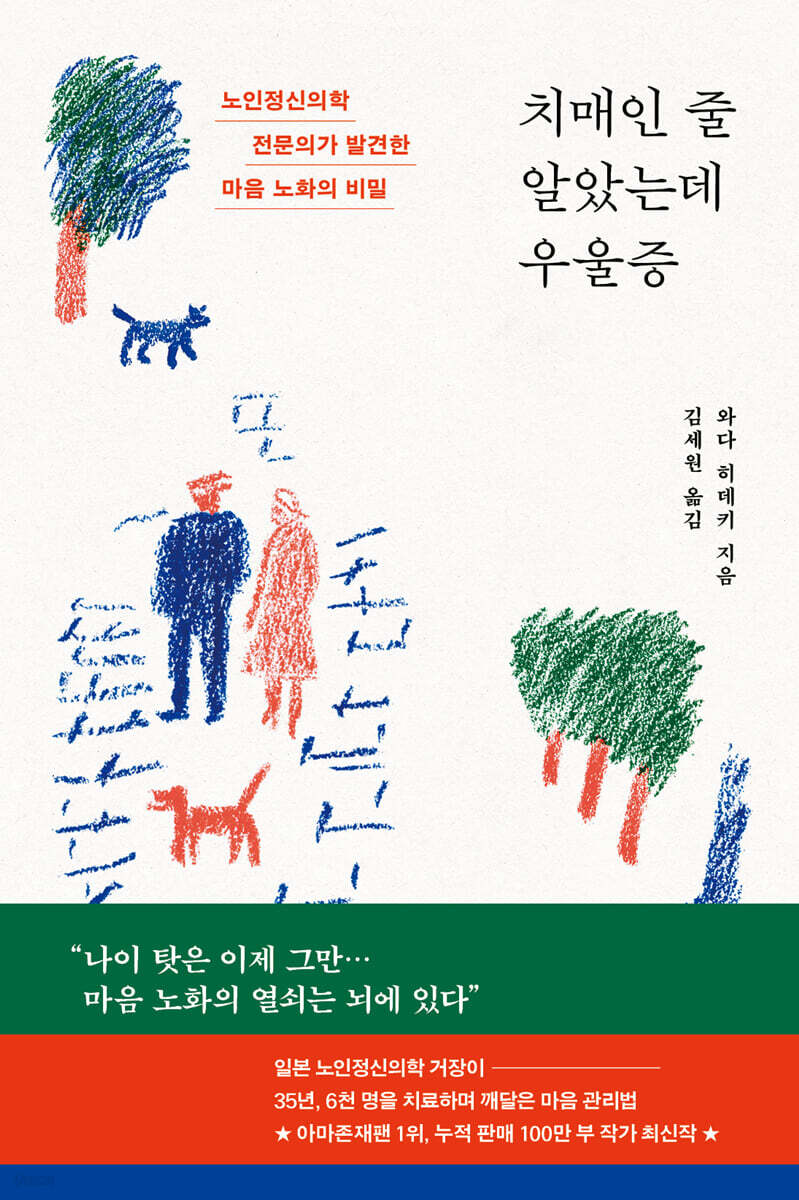
Why Do Families Mistake Depression for Dementia?
Wada opens the book with the three sentences he says he hears constantly in his clinic: "My mother suddenly can't remember things," "My husband has gone quiet and stares into space," and "I can't sleep well at night anymore." Every one of those complaints, he writes, gets filed under "old age" or "maybe early dementia" by families who have never been taught what late-life depression actually looks like. The book's central diagnostic distinction is deceptively simple: dementia is what Wada calls a "slow-moving disease" that rarely requires split-second decisions, whereas depression is a fast-moving, reversible condition where delay directly worsens the outcome. Waiting to see a doctor about suspected dementia is usually harmless. Waiting to see a doctor about suspected depression can cost someone their life, because depression in older adults carries a dramatically elevated suicide risk — Wada cites a Japanese town where the elderly suicide rate was nine times the national average before a targeted depression-screening program brought it down.
Who Is Hideki Wada, and Why Does His Authority Matter Here?
Credibility is the backbone of this book's pitch, and it is worth spelling out for readers outside Japan who may not recognize the name. Hideki Wada (Hideki Wada, わだ ひでき, 和田 秀樹) is a Tokyo-born psychiatrist who has spent three decades treating elderly patients almost exclusively, first at Yokufukai Hospital and now at his own practice, the Wada Hideki Mind and Body Clinic. His prior book, The Wall of 80, became a publishing phenomenon in Japan, selling over 500,000 copies within weeks of release and eventually surpassing 800,000 copies for that title alone, with combined sales across his geriatric-health books topping one million. That commercial success is not just trivia — it signals that Wada has spent years translating clinical geriatric psychiatry into language a lay audience with aging parents can actually use, which is exactly the audience this new book targets.
What Does the Book Actually Cover?
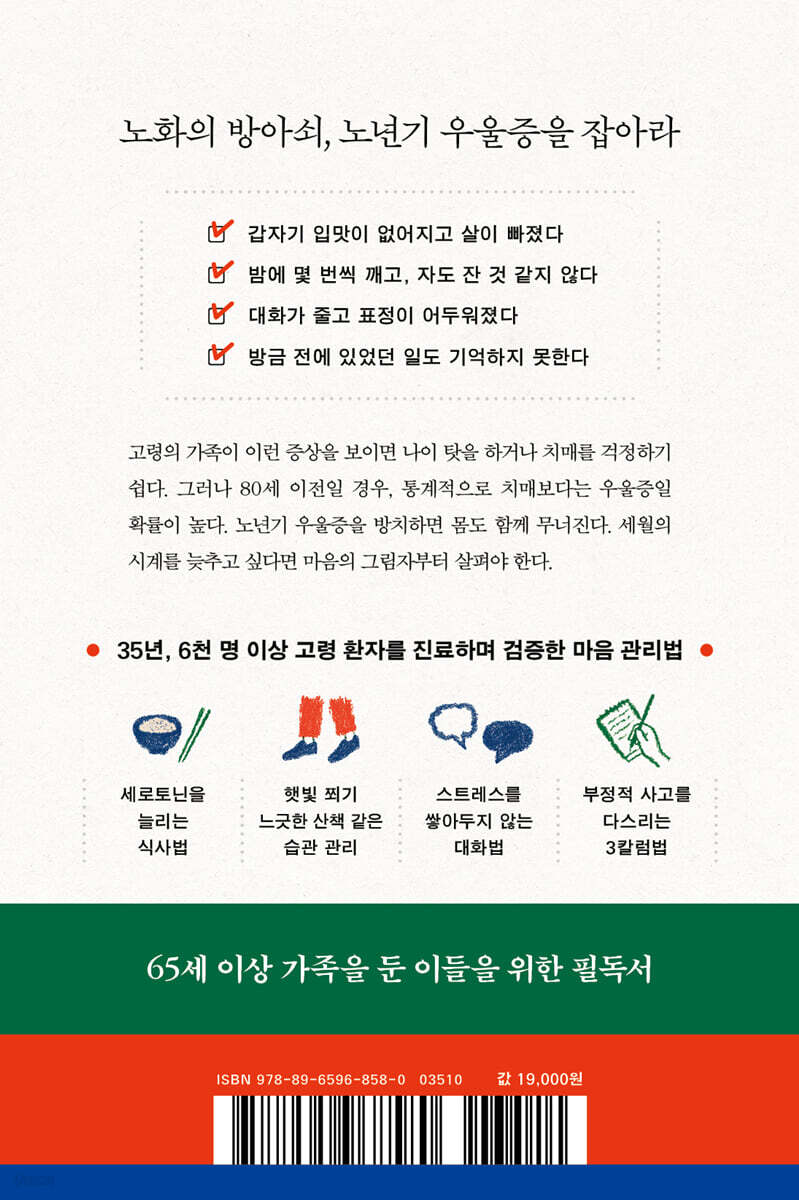
The book runs 192 pages across nine chapters plus a self-check appendix. The structure moves from problem to mechanism to action: Chapter 1 explains which symptoms can wait and which can't; Chapter 2 contrasts the popular myth that dementia patients are "happier" against the much darker reality of untreated depression, including how chronic depression can itself accelerate the onset of dementia. Chapters 3 and 4 dig into the biology — serotonin depletion, frontal-lobe changes, and why doctors sometimes prescribe antidepressants for physical complaints like chronic back pain — and then walk through Wada's practical differential checklist for telling the two conditions apart, including a section on male menopause (andropause) being mistaken for depression. Chapters 5 through 7 reframe depression as a brain condition rather than a matter of willpower, and introduce cognitive-reframing tools such as a "three-column method" for catching distorted thinking. The book closes with two of its most practical sections: Chapter 8, a guide for family members on how to talk to (and how never to talk to) a loved one going through late-life depression, and Chapter 9, daily habits — including a pointed recommendation to turn off the television — that Wada says help protect the aging mind.

How Should You Tell Dementia and Depression Apart in Real Life?
Wada's most quoted passage from the book gets straight to the point: "If someone around you is showing signs of possible dementia, you don't need to rush — you can watch calmly and still find a doctor in time. But if they've lost their appetite, stopped sleeping, and stopped smiling the way they used to, that's a different story. It may not be age catching up with them — it may be a sign of depression, and depression only gets harder to treat the longer you wait." He also flags a detail many families get backwards: forgetting a name here and there is normal aging, not a dementia red flag by itself, while a sudden, sharp change in mood, appetite, or sleep pattern is the pattern worth acting on quickly. When the picture is genuinely unclear, Wada notes that clinicians will sometimes trial antidepressants as a diagnostic tool, since a depressive episode tends to respond while true dementia does not.
Why Does This Book Matter Beyond Japan, Including in Korea?
Although Wada writes primarily about Japanese patients and Japan's mental health system, the underlying demographic pressure is nearly identical across East Asia. South Korea officially crossed the threshold into a "super-aged society" in December 2024, meaning more than 20 percent of its population is now 65 or older, and the country's elderly suicide rate has long been one of the highest among OECD nations — a statistic that echoes the exact problem Wada describes in his opening chapter. That overlap is likely part of why a Korean publisher picked up this title so soon after its original release, and it is also why the book's core message — depression in older adults is common, frequently misdiagnosed as dementia, and highly treatable — lands as more than an imported curiosity for Korean readers navigating their own parents' or grandparents' aging.
Reading-Note Questions
- Which of the "act-now" symptoms Wada lists (appetite loss, sleep disruption, loss of usual joy) have you actually noticed in an aging parent or relative, versus assumed was "just age"?
- Does your own mental model of dementia versus depression match Wada's framework, or did this book overturn an assumption you had?
- What would change in how your family responds to a relative's mood or memory changes if you treated "wait and see" and "see a doctor now" as genuinely different tracks?
Who Should Read This Book?
This is a practical, clinician-written guide best suited for adult children monitoring aging parents, spouses of older adults, caregivers, and anyone in a helping profession — social workers, home-care aides, community health workers — who regularly interacts with elderly clients. It is not a memoir or a general meditation on aging; readers looking for Wada's more sweeping lifestyle philosophy may prefer his earlier bestseller, The Wall of 80, while this title is narrower and more clinical by design, focused specifically on the dementia-versus-depression distinction.
FAQ
1. What is the Korean title of this book, and is there an official English edition?
The original Korean title is 치매인 줄 알았는데 우울증 (published September 8, 2026, by Heureum Publishing). No English-language edition of this specific book has been announced as of this writing; "Dementia or Depression?" is a working translation used for this review, not an official title.
2. Who wrote this book, and what are his credentials?
The author is Hideki Wada (와다 히데키), a Japanese psychiatrist who studied at the University of Tokyo's medical school, trained at the Menninger School of Psychiatry in the United States, and spent decades treating elderly patients at Yokufukai Hospital, a geriatric specialty hospital in Japan. He has treated an estimated 6,000 elderly patients over 35 years and previously wrote the million-copy-selling bestseller The Wall of 80 (80세의 벽).
3. How can I tell if a loved one has dementia or depression?
Per the book, slow, gradual memory decline without major mood or appetite changes leans toward dementia and rarely requires urgent action. A sudden loss of appetite, disrupted sleep, and loss of usual enjoyment lean toward depression, which the author says should be evaluated by a doctor quickly because it responds well to treatment and worsens with delay.
4. Can depression actually cause or accelerate dementia?
Wada argues yes — the book describes depression as a "trigger" for broader physical and cognitive aging, and states that untreated depressive episodes in older adults can contribute to a faster progression toward dementia, making early treatment doubly important.
5. Is this book only relevant to Japan?
No. While the author and his clinical examples are Japanese, the demographic backdrop — a rapidly aging population and elevated elderly suicide rates — closely mirrors South Korea, which became a super-aged society in December 2024, making the book's core arguments broadly applicable to Korean readers as well.
6. Does the book cover how family members should talk to a depressed elderly relative?
Yes, Chapter 8 is dedicated to this, covering what to watch for when a relative's behavior suddenly changes, practical caregiving approaches, the family's role in suicide prevention, and specific phrases the author advises against using, even well-intentioned ones.
7. What is the book's page count and publisher?
The book is 192 pages, published by Heureum Publishing (흐름출판) on September 8, 2026, translated by Kim Se-won (김세원), ISBN13 9788965968580.
Personal Thoughts
What stands out most about this book, at least from the outside of its full text, is how directly it challenges a habit most families fall into without noticing: treating every symptom in an aging relative as an undifferentiated symptom of "just getting old." Wada's insistence that dementia and depression require opposite responses — patience for one, urgency for the other — is the kind of framework that is easy to state and hard to actually apply under the stress of watching a parent change. The book's decision to spend an entire chapter on what not to say to a depressed elderly relative also suggests a level of practical, on-the-ground caregiving guidance that goes beyond diagnosis alone, which is often the harder and more overlooked part of this kind of book.
Final Note
Dementia or Depression? (치매인 줄 알았는데 우울증) is a timely, clinically grounded guide for anyone trying to make sense of confusing changes in an aging parent, spouse, or relative, written by a psychiatrist with three decades of direct geriatric experience. Readers who want to check pricing, the full table of contents, or order the Korean edition can find it at the original YES24 product listing linked below.
