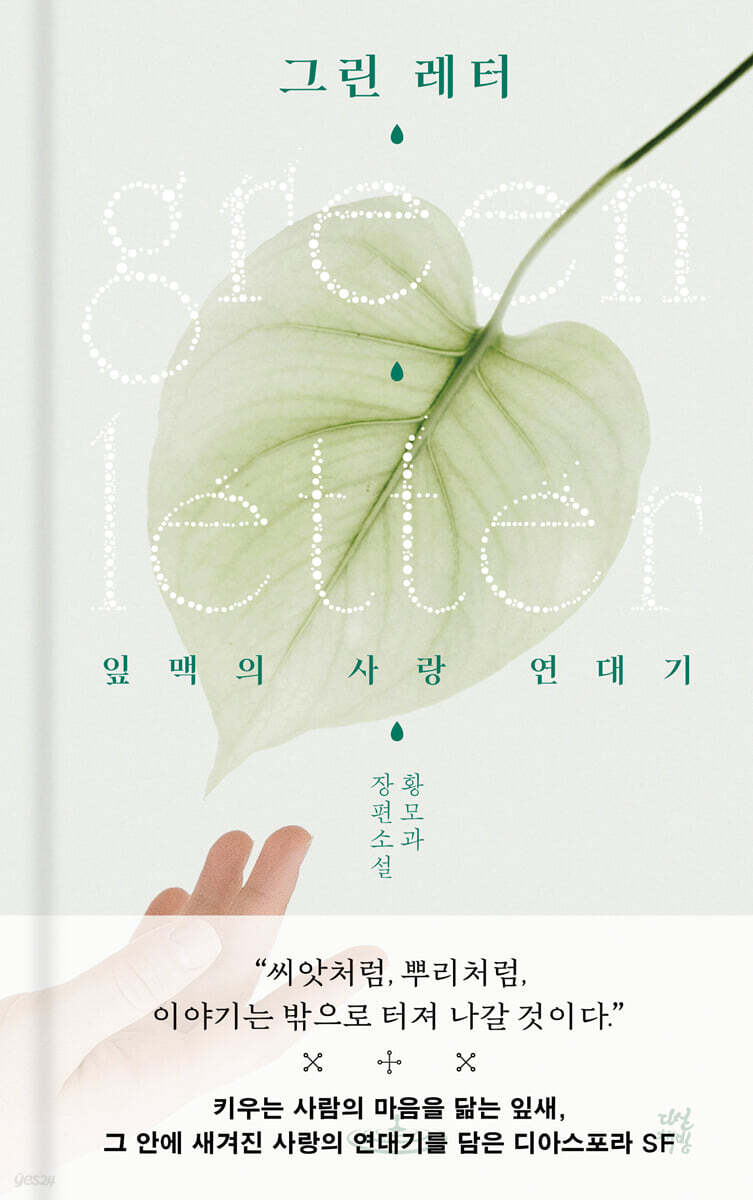
Key Answer: Green Letter (그린 레터) is a 2024 diaspora science fiction novel by award-winning Korean author Hwang Mogwa, published by Dasan Books. It follows Irwin, a researcher in the invented "Ice Mountain Nation," as she tries to decode a message encoded in the leaf veins of Vitistia, a now-extinct plant once used by the Kuzine people to pass messages between generations. As of this writing, no English translation of Green Letter has been announced; translation status should be checked on KLWAVE, though two of Hwang Mogwa's other novels have already been translated into Japanese and Chinese.
Book Information
- English Title: Green Letter
- Korean Title: 그린 레터 (subtitle: 잎맥의 사랑 연대기, "A Chronicle of Love Carved in Leaf Veins")
- Author: Hwang Mogwa (황모과)
- Publisher: Dasan Books Co., Ltd.
- Year: 2024 (July 17, 2024)
- ISBN13: 9791130653495
- Length: 268 pages, hardcover
- Genre: Science Fiction / Diaspora SF
- Source: KLWAVE - Korean Literature Worldwide
Why Should International Readers Pay Attention to This Book?
Hwang Mogwa is one of Korean science fiction's most decorated younger voices: she won the grand prize in the novella and short story category at the 4th Korea Science Literary Award in 2019, the SF Award in 2021, and the Gender Equality Culture Award for Emerging Women in Culture in 2022. What sets her apart is that her speculative premises are almost always grounded in real, often erased, history. Her first novel, The World We'll Meet Again, is set against 1990s Korea's sex-selective abortion crisis, and her third, The Voice of the Voiceless, confronts the 1923 Great Kanto Earthquake and the massacre of Koreans in Japan that followed. Green Letter continues this project under an explicit label the publisher itself uses: diaspora science fiction. For international readers, that framing is unusual and valuable. Instead of asking Korean SF to explain Korea, this book uses an entirely invented world to ask a question that resonates with displaced and diasporic communities everywhere: what survives when the medium carrying a people's memory disappears?
What Problem Does This Book Address?
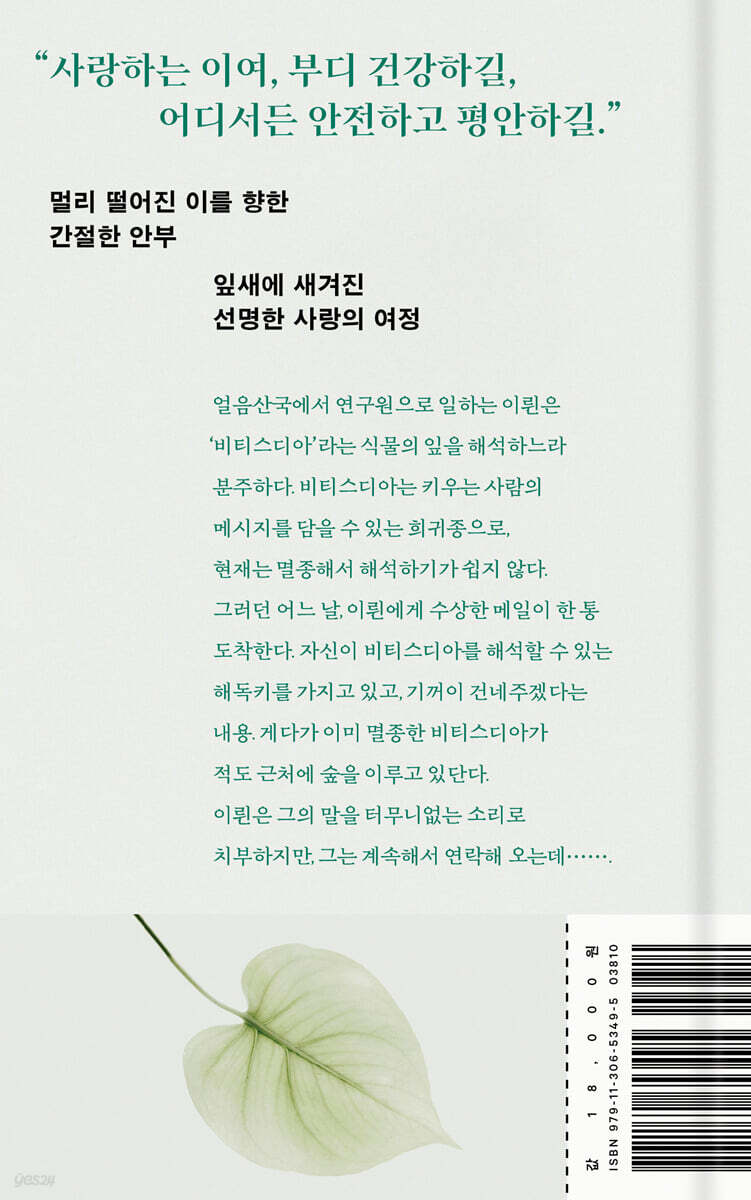
In Green Letter, the Kuzine people once encoded personal messages into the leaf veins of a rare plant called Vitistia, a custom outsiders dismissed as mere superstition. When an ecological disaster described as a "heatwave tsunami" pushed Vitistia to extinction, that entire channel of intergenerational communication vanished with it. Irwin, a researcher working in the fictional Ice Mountain Nation, holds the very last surviving leaf, grown years earlier by her own great-grandfather, Purun. To read his message, she has to recover a decoding method passed down, imperfectly, among the Kuzine. The novel poses a problem familiar to many real diaspora and minority-language communities worldwide: when a script, a custom, or a medium of memory is dismissed and lost, is that knowledge truly gone, or can it be pieced back together by someone determined enough to keep looking?
What Makes This Book Stand Out?
- Explicitly marketed by publisher Dasan Books as "diaspora SF," a rare and specific framing among recent Korean speculative fiction releases.
- Builds directly on Hwang Mogwa's earlier short story of the same title, first published in 2021 in Ordinary Us (보통의 우리), an anthology from Korea's only festival dedicated entirely to diaspora film.
- Selected as one of the featured "Summer First Book" (첫 책) picks at the 2024 Seoul International Book Fair.
- Written by an author with a genuine award pedigree: the 4th Korea Science Literary Award grand prize (2019), the SF Award (2021), and the Gender Equality Culture Award for Emerging Women in Culture (2022).
- Set in a fully invented culture, the Kuzine people, the Vitistia plant, and the Ice Mountain Nation, so international readers start on equal footing with Korean readers; no prior knowledge of Korean geography or history is required.
- Has maintained a place on YES24's genre fiction bestseller ranking since release, a sign of sustained reader interest in Korea.
What Is the Core Insight Worth Noting?
The most distinctive idea in Green Letter is that the Kuzine "language" for passing down messages was never spoken or written in the conventional sense; it was grown. A message took years to cultivate into a leaf's veins, which reframes cultural transmission as something patient and organic rather than instant and easily archived. Hwang's fiction suggests that erasure is rarely total. What looks extinct, a plant, a custom, an entire practice of remembering, can survive in fragments: a single last leaf, or an inherited determination to understand it. That mirrors the author's larger body of work, which her own KLWAVE biography describes as reviving "those wrongfully erased from history" and offering "alternative historical narrative." In Green Letter, the erasure is fictional, but the emotional logic, an heir refusing to let a grandparent's message go unread, will feel familiar to anyone with a family history shaped by migration, war, or forced assimilation.
How Should a Non-Korean Reader Approach This Book?
- Treat the invented geography, the Ice Mountain Nation and the Kuzine tribe, as a deliberate abstraction. Hwang builds an original world rather than mapping the story onto a specific real region, so no prior background in Korean history is required to start.
- Read the Vitistia leaf premise as a stand-in for any endangered mother tongue, oral tradition, or diasporic memory practice, rather than as a literal botany story.
- Notice how the novel's mystery-thriller mechanics, decoding a message, a stranger claiming to hold "the key", carry the deeper themes of inheritance and identity rather than existing only for suspense.
- Keep Hwang Mogwa's wider bibliography in mind. Green Letter belongs to a sustained project of alternative histories that also includes The World We'll Meet Again and The Voice of the Voiceless.
- If you have access to the Korean text, compare how "그린 레터" plays against the plant's invented name, Vitistia; the English title itself is a translated framing choice worth noticing.
What Questions Should Readers Carry While Reading?
Green Letter rewards active reading, especially given how deliberately it withholds and reveals its invented world. These questions help keep that attention sharp.
- What would you be willing to do to decode a message left by an ancestor you never met?
- How does treating a plant as a communication medium change your idea of what counts as a "language"?
- What does the extinction of the Vitistia plant suggest about how ecological disaster can also become cultural loss?
- Why might the Kuzine's own descendants have dismissed the leaf-message custom as superstition, and what did that dismissal cost them?
- How does this diaspora science fiction story compare with diaspora narratives you already know from outside Korea?
Who Should Read This Book?
- Readers drawn to speculative fiction that foregrounds diaspora and cultural memory, in the tradition of writers like Ted Chiang or Ken Liu.
- Fans of Hwang Mogwa's earlier work, including The World We'll Meet Again and The Voice of the Voiceless.
- Anyone who enjoys a mystery-driven plot wrapped around a larger meditation on inherited identity.
- Readers who enjoyed Kim Cho Yeop's Jellyfish in Full Bloom, covered earlier on this blog, and want another entry point into contemporary Korean science fiction.
- International readers tracking upcoming Korean-to-English translations through KLWAVE.
Frequently Asked Questions
Is Green Letter available in English?
As of this writing, no confirmed English translation of Green Letter has been announced. KLWAVE's translator interest section for this title currently shows no submitted expectations, so translation status should be checked directly on KLWAVE before assuming an edition exists. Two of Hwang Mogwa's other novels have already appeared in Japanese and Chinese, so the author does have an international translation track record, just not yet for this specific title.
What genre is Green Letter?
It is categorized by its publisher as diaspora science fiction, combining an invented-world SF premise with themes of migration, inherited memory, and cultural erasure.
Do I need to read Hwang Mogwa's other books first?
No. Green Letter stands on its own, though it grew out of an earlier short story of the same title, first published in the 2021 anthology Ordinary Us (보통의 우리), issued by Korea's Diaspora Film Festival.
How long is Green Letter?
The Korean hardcover edition runs 268 pages, published by Dasan Books on July 17, 2024.
Was Green Letter recognized by any award or festival?
Yes. It was selected as one of the featured "Summer First Book" picks at the 2024 Seoul International Book Fair. Author Hwang Mogwa has also won the grand prize at the 4th Korea Science Literary Award (2019), the SF Award (2021), and the Gender Equality Culture Award for Emerging Women in Culture (2022).
Where can I learn more about Hwang Mogwa and her translation status?
KLWAVE, the official platform of the Literature Translation Institute of Korea, maintains an author and title profile with translation and rights information that is updated as new editions are confirmed.
Personal Thoughts
What lingers after Green Letter is the image of a message that takes years to grow rather than seconds to send. In an era where communication is instant and searchable, Hwang Mogwa imagines the opposite extreme: a "letter" that only exists because someone tended a plant with patience across a lifetime, and that can only be read by someone equally patient generations later. It is a quiet rebuke to how easily we now assume that anything worth preserving will simply be backed up somewhere. Pair that with Hwang's consistent interest in people and histories that official records tend to erase, and Green Letter reads less like a genre exercise and more like an argument: that memory, especially diasporic memory, is labor, not storage.
Final Note
Green Letter is part of a broader wave of Korean speculative fiction that is gaining international attention even before individual titles find an English publisher. Hwang Mogwa has been building a body of work around diaspora and inherited memory for several years now, and this novel is the clearest statement of it so far. Rights status for the title can shift without much notice, so the current position is best confirmed at KLWAVE, the official platform of the Literature Translation Institute of Korea.
Book information and images referenced from YES24 and KLWAVE (Literature Translation Institute of Korea). This review is an original article written by the site operator based on publicly available book descriptions. Reference: KLWAVE Featured Title
