Korean literature in translation keeps expanding beyond fiction, and one of the strongest nonfiction candidates for English readers right now is Lee Lang's essay collection A History of Madwomen: Mothers and Daughters (엄마와 딸들의 미친년의 역사). Published in March 2026 by Storyseller (이야기장수), this collection of nineteen interconnected essays has already circulated internationally — editions in Japan and Taiwan reportedly preceded this Korean release — even though an official English translation is not yet confirmed. This post introduces the book's content, context, and the reasons it deserves a spot on any Korean-Literature-in-Translation reading list, drawing on the official description published by KLWAVE (Korea Literature Wave), the English-language rights-sales platform run by the Literature Translation Institute of Korea, plus cover imagery sourced from YES24.
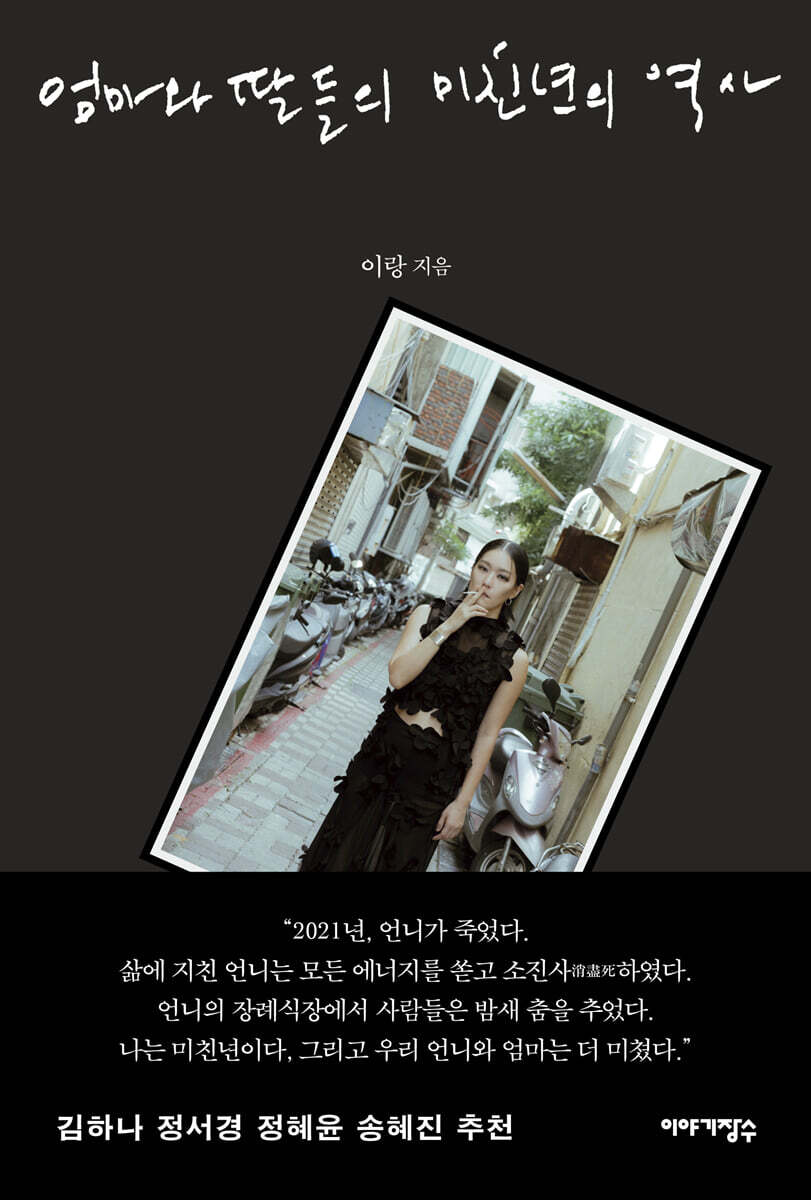
Key Answer: A History of Madwomen: Mothers and Daughters is a 2026 Korean essay collection by musician-writer Lee Lang (이랑), published by Storyseller. Its nineteen essays examine inherited female pain across three generations — grandmother, mother, and daughter — using the death of the author's older sister and a fraught relationship with her mother as anchoring threads. The book reportedly already exists in Japanese and Taiwanese editions, but as of this writing no English translation has been confirmed; KLWAVE's own translator-interest tracker for the book currently shows no submitted requests, so its English-language status should be checked directly on KLWAVE before assuming an edition exists.
Book at a Glance
- Korean title: 엄마와 딸들의 미친년의 역사
- English title (KLWAVE): A History of Madwomen: Mothers and Daughters
- English rights pitch title: Crazy Bitch: Notes on Love, Death, and the Body
- Author: Lee Lang (이랑)
- Publisher: Storyseller (이야기장수)
- Year published: 2026
- ISBN: 9791194184560
- Genre: Essay (에세이), 19 pieces
Why Should International Readers Care About This Book?
International readers who enjoyed memoirs like Michelle Zauner's Crying in H Mart, Jennette McCurdy's I'm Glad My Mom Died, or Roxane Gay's Hunger will recognize the terrain here immediately. Lee Lang writes about grief, the body, and inherited family trauma with the same unsparing candor, but her frame of reference is distinctly Korean: a household shaped by Confucian expectations about womanhood, motherhood, and self-sacrifice. Because the essays are explicitly positioned for overseas rights deals on KLWAVE, this is a title actively being pitched for international discovery, which makes it a timely pick for readers tracking contemporary Korean nonfiction rather than only Korean fiction.
What Problem Does This Book Address?
The essays confront a specific, generational problem: women in Lee's family — and by extension, many Korean women of her mother's and grandmother's cohorts — were rarely given language for their own anger, grief, or desire. The book's second essay, circulated in English rights materials under the title "Crazy Bitches: A Personal History of Mothers and Daughters," reconstructs conversations with Lee's mother and family stories to ask why women have children at all inside a culture that demands near-impossible standards of devotion. Running through the whole collection is the more private problem of processing the suicide of Lee's older sister — treated not as a single traumatic event to move past, but as an ongoing fact the author keeps returning to from new angles, including a funeral-home dance, an unfinished note left in a phone's notes app, and a car that once belonged to her sister.
What Makes It Stand Out From Other Korean Essay Collections?
Structurally, the book resists the standard memoir arc of crisis-then-resolution. According to KLWAVE's description, the nineteen essays move fluidly between diary entries, philosophical reflection, letters, performance texts, dreams, and even prayer, rather than following a single linear narrative. Lee Lang is also not primarily known as a prose writer — she is a well-known Korean indie singer-songwriter — and that background surfaces in the essays' rhythm and their comfort holding contradictory emotions side by side (grief and dark humor, fury and tenderness) without forcing them into a tidy lesson.
What Is the Core Insight of A History of Madwomen?
The insight the collection keeps circling back to is that individual suffering in these women's lives is inseparable from larger social structures. Lee frames her mother's hardships and her sister's death not as isolated personal tragedies but as outcomes of a culture that scripts what a "good" daughter, wife, or mother must sacrifice. At the same time, the book insists this inheritance does not only transmit damage: writing itself becomes the tool Lee uses to interrupt the pattern, turning books that were once weaponized against her as a child — thrown across a room by a violent father — into the architecture she now builds an adult identity from.
How Should a Non-Korean Reader Approach This Book?
Readers without deep familiarity with Korean family structures may want to keep three touchstones in mind. First, the weight of Confucian filial expectations placed specifically on daughters. Second, the cultural stigma historically attached to suicide and mental illness, which helps explain why Lee reclaims a slur like "crazy bitch" rather than avoiding it. Third, the fact that Lee Lang's public identity as a musician means some essays double as commentary on being a visible, unconventional woman in Korean pop culture. None of this requires prior research to follow — KLWAVE's synopsis and any eventual translator's introduction should supply the necessary context — but going in aware of these frames will make specific, sometimes startling details, such as turning a sister's ashes into a lab-grown diamond, land as culturally embedded choices rather than shock value.
What's a Good Reading Checklist Before You Start?
- Confirm whether an English edition exists yet by checking the book's KLWAVE page directly, since translation rights were still open at last update.
- Read the essays as a cumulative portrait rather than expecting one chronological memoir.
- Note where Lee shifts form — diary entry, letter, dream, prayer — and consider why that form fits that particular memory.
- Track how a small set of recurring images (the sister's car, the phone note, the diamond) change meaning each time they reappear.
- If you want a sense of tone before starting, compare it mentally to a Western comp title like Crying in H Mart.
What Questions Should You Ask While Reading?
- What is one memory or sensation from your own family history that you have never fully put into words?
- Does the book's title reframe "madness" as a diagnosis, or as a survival response to an impossible standard?
- Which essay's shift in form — letter, dream, performance text — affects you most, and why?
- Do you read the collection's closing claim, that loving fully may be the only thing worth the cost of living, as hopeful or resigned?
Who Should Read This Book?
This collection suits readers drawn to fearless, socially aware memoir-in-essays — fans of Zauner, McCurdy, or Gay, as noted above, but also anyone interested in contemporary Korean women's nonfiction, intergenerational trauma narratives, or first-person writing by musicians and other performers moving into prose. Readers who prefer a single clean narrative arc, or who want a gentle read, should know upfront that grief, suicide, and complicated family anger are treated directly and repeatedly throughout.
FAQ
Is A History of Madwomen: Mothers and Daughters available in English?
Not confirmed as of this writing. It is featured on KLWAVE's Featured Titles for Rights Sales list specifically because English rights are still being pitched to publishers, and KLWAVE's own translator-interest tracker for the book shows no submitted requests yet. Translation status should be checked directly on KLWAVE before assuming an English edition exists.
Who is Lee Lang (이랑)?
Lee Lang is a Korean indie singer-songwriter who has also built a body of nonfiction and essay writing. This book continues themes of family, gender, and identity that appear across her broader creative work, according to her KLWAVE author profile.
What genre is this book?
It is a nonfiction essay collection of nineteen interconnected pieces, not a novel, memoir-in-verse, or short-story collection, per KLWAVE's official categorization ("Essay").
What is the English pitch title used for rights sales?
Overseas rights materials for the book circulate under the English working title "Crazy Bitch: Notes on Love, Death, and the Body," though the final title of any future translated edition could differ once, and if, a publisher acquires it.
Has this book been translated into any other language?
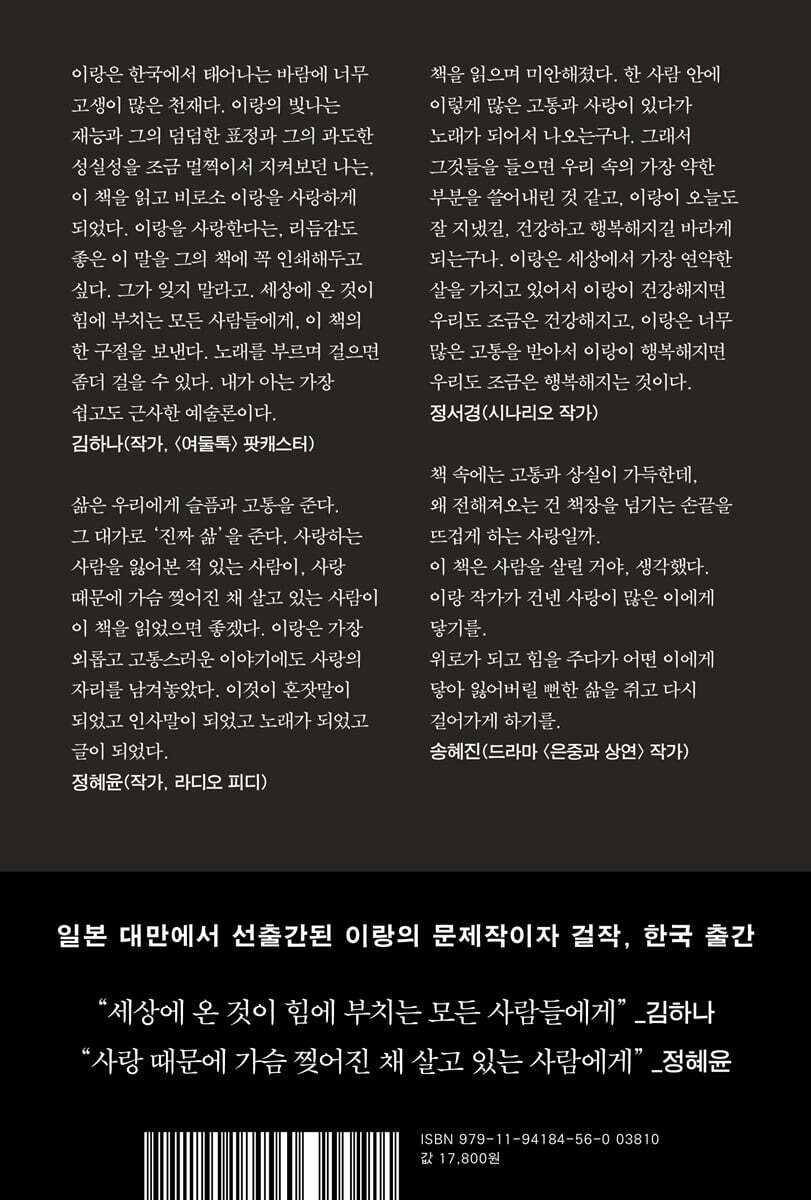
According to the back-cover copy of the Korean edition, editions in Japan and Taiwan preceded the Korean release, though English-language rights and any other future international editions should still be confirmed directly with KLWAVE or the rights holder, Storyseller.
Where can I verify the book's official description and rights status?
KLWAVE (klwave.or.kr), the English-language platform run by Korea's Literature Translation Institute, hosts the book's official synopsis, author bio, and translator-interest tracker. YES24 (yes24.com) is the source for the Korean print edition's cover art and publication details used in this post.
Personal Thoughts
What struck me most while researching this book through KLWAVE's synopsis is how directly it names things Korean-language memoir sometimes leaves implicit — the specific mechanics of how a mother's unmet needs get quietly handed down to a daughter, and how naming that inheritance out loud, even with a title as blunt as "madwomen," can function as its own form of care rather than an accusation. I have not read the full Korean text myself, so this introduction is based on the official synopsis, author bio, and cover materials rather than a personal reading of the essays. Readers who want the full experience should seek out the Korean original or watch for confirmation of an English edition.
Final Note
For the most current information on this book — including any future confirmation of an English translation, updated author details, or additional rights information — see the book's official page on KLWAVE, the Literature Translation Institute of Korea's English-language platform.
